Spring Koi Pond Care: Why Your Koi May Be Swimming Slowly
As spring arrives, koi may swim slowly or stay near the bottom of the pond, which is a normal part of their seasonal adjustment. Pond owners should be patient and understand that koi will gradually become more active as water temperatures rise.
- Koi are cold-blooded and their activity levels depend on water temperature, not air temperature.
- In early spring, it is common for koi to swim slowly and show limited activity as they adjust to warming water.
- Pond owners should monitor their fish for health issues while allowing them time to wake up from winter.
Koi may swim slowly in spring due to cooler water temperatures, which can reduce their metabolism and activity levels. Additionally, they might be adjusting to changes in their environment after winter, leading them to stay near the bottom or exhibit less movement as they acclimate to warmer conditions.
When spring begins, many pond owners are excited to get outside and enjoy their water feature again. The weather starts to feel nicer, the ice is gone, and the pond begins to look more alive. But when you look into the water, your koi may not seem very active yet. They may be swimming slowly, staying near the bottom, or barely moving at all.
That can make pond owners nervous.
The good news is that this is often a normal part of spring koi pond care. Koi do not wake up quickly just because the air feels warm. Their bodies react to the temperature of the water, not the temperature outside. Even if it feels like spring to you, the pond may still be cold.
If your fish are moving slowly right now, there is a good chance they are simply adjusting to the season. In many cases, slow movement in early spring is exactly what healthy koi should be doing.
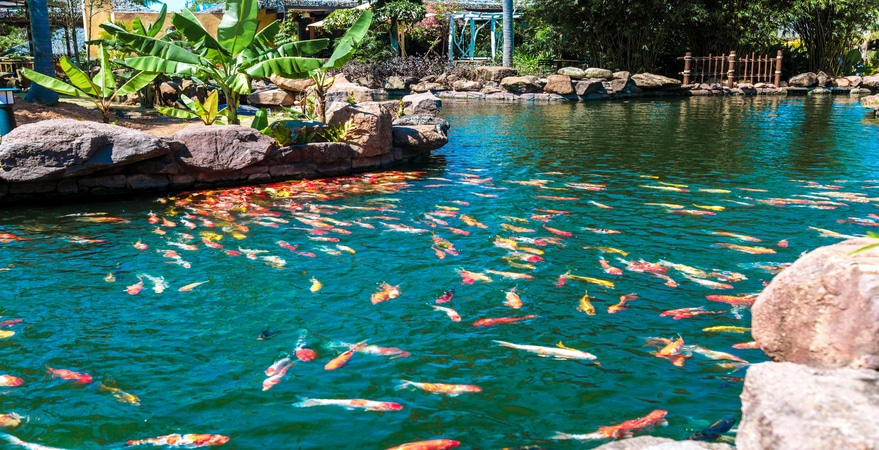
A serene pond with vibrant koi fish creating a mesmerizing display of colors.
Cold Water Slows Koi Down
Koi are cold-blooded fish. That means their body temperature depends on the water around them. When the pond gets cold in winter, their bodies slow down too.
During the winter months, koi use less energy. They do not swim around the pond the same way they do in summer. They also do not eat much because their digestion slows down in cold water. Instead, they rest and stay calm to conserve energy.
This is why fish often spend more time near the bottom of the pond during winter. The deeper water is usually more stable and can be a little warmer than the surface.
When spring arrives, the pond does not warm up all at once. Even if the sun is out and the yard feels nice, the water may still be too cold for koi to become fully active. That is why slow swimming is such a common part of spring koi pond care.
Spring Is a Slow Change for Pond Fish
One thing pond owners should remember is that spring is a transition. It is not a sudden switch.
To us, the season can seem like it changes overnight. One week it feels cold, and the next week the birds are back and flowers are starting to bloom. But pond water warms much more slowly than the air.
That means your koi may still be in winter mode, even when everything around the pond looks bright and fresh.
As water temperatures slowly rise through the spring, your fish begin to wake up little by little. You may see them move more on warm afternoons and then rest again when temperatures drop. This back-and-forth is normal. Good spring koi pond care means understanding that fish need time to adjust.
What Normal Spring Behavior Looks Like
It helps to know what is normal so you do not worry too quickly.
In early spring, healthy koi may:
- Swim slowly around the pond
- Hover in one spot for a while
- Stay near the bottom
- Show short bursts of activity and then rest
- Spend a little time in shallow areas on sunny days
- Ignore food at first or show only mild interest
These signs are usually part of the natural spring warm-up period. Your fish are not being lazy. Their bodies are simply not ready to be fully active yet.
Think of it like waking up early in the morning. You may be out of bed, but that does not mean you are ready to sprint across the yard. Koi need time to fully wake up too.
Why Your Fish Are Not Acting Like It Is Summer
Many homeowners expect their koi to bounce right back as soon as winter ends. But fish do not follow the calendar. They follow the pond temperature.
In summer, koi are active, hungry, and always on the move. They cruise around the pond, come up for food, and seem full of energy. In early spring, they are not there yet.
Their digestion is still slow. Their energy level is still low. Their bodies are adjusting to a changing environment. That is why one of the most important parts of spring koi pond care is patience.
It may take a few weeks of warmer weather before your fish begin to act more like their summer selves.
When to Feed Your Koi in Spring
One of the biggest spring questions pond owners ask is when feeding should begin again.
This is an important part of seasonal pond care because feeding too early can cause problems. If the water is still too cold, koi may not digest food properly. That can put stress on their bodies.
A good rule of thumb is to wait until the pond water stays at about 50 degrees Fahrenheit or above on a regular basis. Not just one warm afternoon, but a steady pattern.
Once the water reaches that point, start with a small amount of food. Choose a fish food made for cool water if possible, since it is easier for koi to digest during this time of year.
Do not overfeed. In the early weeks of spring, less is better. A smart feeding plan is a big part of good spring koi pond care.
Keep an Eye on Your Fish
Even though slow swimming is usually normal, spring is still a great time to pay close attention to your koi.
After a long winter, you want to make sure they are healthy as they come into the new season. Watching them for a few minutes each day can help you spot problems early.
Look for signs such as:
- Redness on the body
- Open sores
- Torn fins
- Fish staying away from the group all the time
- Gasping at the surface
- Strange or jerky swimming
- Trouble staying balanced
These signs are different from simple slow movement. Moving slowly in cold water is normal. But visible damage or unusual behavior may mean your koi need help.
Catching an issue early gives you a better chance of solving it before it becomes a bigger problem.
Your Pond May Wake Up Before Your Fish Do
One thing that confuses many pond owners is that the pond itself can look ready for spring before the fish are.
You may hear the waterfall running again. You may see plants starting to grow. The sunlight may make the pond look bright and beautiful. But your koi are still reacting to cold water below the surface.
This is why spring koi pond care can feel a little confusing. The yard says spring, but the fish still seem stuck in winter. That is normal.
Ponds wake up in stages. First the ice disappears. Then the water warms slowly. Then the fish begin to move more. After that, feeding starts. A little later, everything begins to feel fully alive again.
It is a process, not an instant change.
Patience Is Part of Spring Koi Pond Care
The biggest thing your koi need in early spring is time. Their bodies are adjusting after the cold winter months. What seems slow to us is often just normal seasonal behavior for them.
Good spring koi pond care means watching your fish, waiting for steady water temperatures before feeding, and understanding that they will wake up little by little.
Soon enough, your koi will be swimming around the pond again, looking bright, active, and ready for the season ahead. Until then, a little patience and close observation go a long way.