6 Easy Summer Pond Care Tips for Denver Homeowners
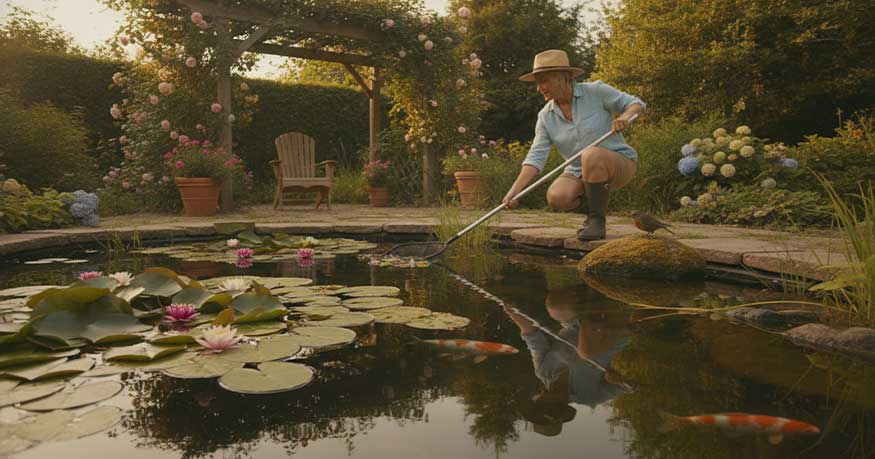
Summer is one of the best times to enjoy a backyard pond, but hot Colorado days can create challenges like reduced oxygen levels and faster algae growth. A few simple steps can keep water clear, fish comfortable, and plants healthy throughout the season.
- Keep water moving with pumps, waterfalls, and aerators to maintain oxygen levels, especially during heat waves when warm water holds less oxygen and fish are more active.
- Provide shade by covering one-third to one-half of the pond surface with waterlilies or floating plants, and make sure the pond is at least two feet deep so fish can access cooler water.
- Watch fish for warning signs like gasping at the surface or gathering near moving water, and regularly remove dying leaves and flowers before they decay and feed algae growth.
Summer pond care involves maintaining proper water quality and keeping fish healthy during warm months. Focus on regular water testing, adequate aeration to boost oxygen levels, controlling algae growth, feeding fish appropriately, topping off water lost to evaporation, and removing debris like fallen leaves. These simple steps help your pond thrive throughout the hot season.
Summer is one of the best times to enjoy a backyard pond. Waterlilies are blooming, koi are swimming, and birds may stop by for a quick drink. A pond can become the most relaxing part of your outdoor space.
However, hot Colorado days can also create problems for your pond. Warm water holds less oxygen than cool water. Fish are often more active during summer, so they need even more oxygen. Bright sunlight can also help algae grow faster.
The good news is that summer pond care in Denver does not need to be difficult. A few simple steps can help keep the water clear, the fish comfortable, and the plants healthy.
Here are six ways to help your pond through the hottest part of the year.
1. Keep Water Moving
Moving water is one of the most important parts of a healthy summer pond.
Waterfalls and streams do more than create a peaceful sound. As water splashes and moves, it brings oxygen into the pond. This extra oxygen helps fish, plants, and the helpful bacteria living inside the pond.
Make sure your pump, waterfall, and stream are running correctly. Watch for water flow that seems slower than normal. A dirty skimmer basket, clogged filter pad, or blocked pump can reduce circulation.
It is also important to look for quiet areas where the water does not move much. These still spots can become warmer than the rest of the pond. Leaves, dirt, and other debris may also collect there.
Good circulation helps move water through the filtration system. It also spreads oxygen around the pond instead of keeping it near the waterfall.
During long stretches of hot Denver weather, you may need more water movement. A pond aerator, small fountain, powerhead, or added pump can help keep the water moving.
2. Add Extra Oxygen During Hot Weather
Warm water cannot hold as much oxygen as cooler water. This can become a problem during July and August, especially when daytime temperatures stay high for several days.
Fish also use more oxygen when they are active. Helpful bacteria need oxygen too. These bacteria help break down fish waste, old plant material, and other debris.
A pond aerator is one of the easiest ways to add oxygen. It sends bubbles up from the bottom of the pond. As the bubbles rise, they help move water and improve oxygen levels.
Aeration is helpful during the day, but it can be especially important overnight. Pond plants create oxygen when the sun is shining. At night, those same plants begin using oxygen. This can cause oxygen levels to drop before sunrise.
Running an aerator all day and night can give your fish extra protection during a heat wave. It also keeps deeper water from becoming still.
Adding aeration is a simple part of summer pond care in Denver that can make a big difference.
3. Give Fish Shade and Deeper Water
Fish need a cool place to rest when the sun is strong.
A pond that is at least two feet deep usually gives fish access to cooler water near the bottom. Shallow ponds warm up much faster and may not offer enough relief during very hot weather.
You can also create shade with waterlilies and other floating plants. Try to cover about one-third to one-half of the pond’s surface during the hottest part of summer.
Popular pond plants that provide shade include:
- Hardy waterlilies
- Water lettuce
- Water hyacinth
- Mosaic plant
Floating leaves block some sunlight from reaching the water. This helps lower the water temperature and can slow algae growth.
Plants also give fish a place to hide from birds and other animals. Koi often enjoy resting under lily pads when the afternoon sun is strong.
Shade may also come from a nearby tree, pergola, umbrella, or landscape planting. Just be careful with trees that drop large amounts of leaves or seeds into the pond.
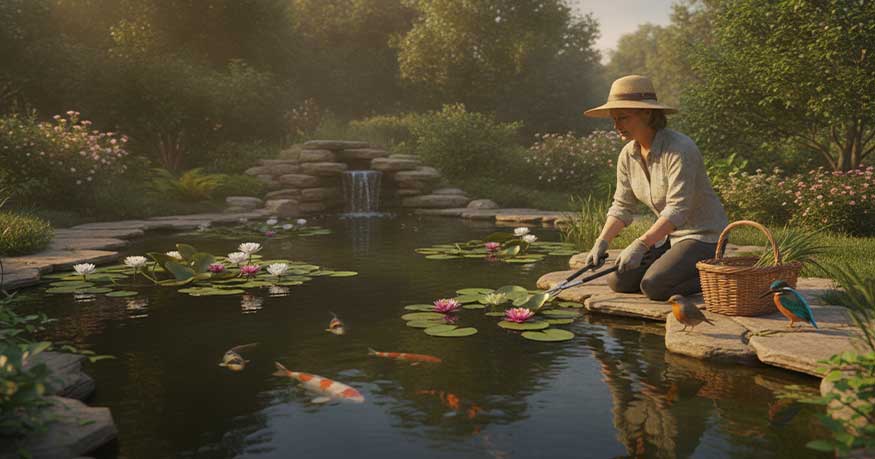
A peaceful morning by the garden pond. She gently tends the water lilies as koi glide beneath the surface.
4. Watch Your Fish for Warning Signs
Your fish can often tell you about a pond problem before the water looks unhealthy.
Spend a few minutes each day watching how they behave. Healthy fish should swim normally, respond to movement, and show interest when you approach the pond.
Warning signs may include:
- Gasping at the water’s surface
- Gathering near the waterfall
- Staying close to an aerator
- Swimming slowly or acting weak
- Hiding more than usual
- Showing little interest in food
Fish gathering near moving water is often a sign that they are looking for more oxygen. Gasping at the surface can also mean oxygen levels are too low.
Check the pump and waterfall right away. Make sure nothing is blocking the flow. Adding aeration may help, but it is also important to find out why oxygen levels dropped.
Fish behavior can also change because of poor water quality, illness, or sudden temperature changes. If something seems unusual, do not ignore it.
Catching a small problem early is much easier than dealing with a larger pond issue later.
5. Remove Dying Leaves and Flowers
Summer pond plants can grow quickly, but they also need regular trimming.
Remove yellow leaves, brown lily pads, faded flowers, and damaged plant growth. Do not allow dead plant material to sink to the bottom of the pond.
Once leaves and flowers begin to break down, they add extra nutrients to the water. Those nutrients can feed algae and make the water cloudy.
Old plant material can also use oxygen as it decays. During hot weather, when oxygen may already be low, this can place more stress on the pond.
Check floating plants for yellowing or burned leaves. Strong summer sun can damage water lettuce, water hyacinth, and even waterlily pads.
Removing damaged leaves allows the plant to use its energy for healthy new growth. It also keeps the pond looking neat.
Plants are an important part of summer pond care in Denver because they provide shade, remove nutrients, and create shelter for fish. Keeping them healthy benefits the entire pond.
6. Support the Pond’s Natural Balance
A healthy pond works as a complete system. The pump, filter, plants, fish, rocks, water, and helpful bacteria all support one another.
Your filtration system should remove leaves, fish waste, and other debris before it breaks down in the pond. Check the skimmer basket regularly and empty it when needed.
Filter pads may need light cleaning if water flow becomes slow. Avoid washing biological filter material with untreated tap water because chlorine can harm the helpful bacteria living on it.
Do not over-clean the pond either. A pond does not need to look like a swimming pool to be healthy. Some algae on rocks and pond surfaces is normal and gives fish something to graze on.
The goal is balance, not perfectly spotless water.
A balanced summer pond should have:
- Steady water circulation
- Enough oxygen
- Proper filtration
- Healthy aquatic plants
- Shade for fish
- Regular removal of debris
When these parts work together, the pond is better able to handle heat, storms, fish waste, and changing weather.
Enjoy a Healthier Pond All Summer
Summer should be a time to enjoy your pond with family and friends. It should not feel like a constant maintenance project.
Watch your fish, keep the water moving, provide shade, and remove dying plant material. These simple habits can prevent many common summer problems.
If your pond water remains cloudy, algae keeps returning, or fish appear stressed, there may be a problem with the pond’s design, circulation, or filtration.
BR&D Landscape helps Denver-area homeowners build, renovate, and care for backyard ponds and water features. Professional help can make it easier to find the cause of a pond problem and create a long-term solution.With the right summer pond care in Denver, your pond can stay clear, peaceful, and enjoyable even during the hottest Colorado days.